GoodlifeNews!

Exploring a Potpourri of Biblical Ideas and Godly Living

Greetings once again friends! This is Episode 18 of the podcast. The title of this week’s episode is “Alive in Christ.”

In today’s episode, I’ll be sharing some thoughts about Living the Christian life with Integrity in all our relationships every day, whether in the home, among friends, or interacting with other people wherever we may be.

Click HERE to listen to the audio podcast at https://anchor.fm/goodlifenews.


I don’t know if I’ve shared this fact about myself recently or not, but I need to tell you about it now. When I was young—before I accepted Jesus as my personal Savior and invited Him to be Lord of my life—I had a pretty foul mouth. I’m not proud of that now, for sure, but it’s something the Holy Spirit had to clean up for me as I grew in God’s grace.

One incident sticks in my mind that revealed to me just how negatively my witness for Jesus was impacted by the gutter language coming from my mouth. It was a significant moment in my spiritual growth, although I didn’t recognize it as that at the time.

My brother Beryl and I were working for a neighboring farmer as hired hands. Our assigned jobs sometimes brought us together for a particular job or project. Beryl was a couple of years older than me. We were both in our late teens.

One day Mr. Childers—the farmer who hired us—needed a barbed wire fence built across one of his pasture fields. Beryl and I got our supplies together and headed out to do the job. Since he was older, he was the unspoken leader for the task.

The first thing we needed to do was set all the fence posts in a straight line from one side of the field to the other. It was a matter of pride in our farming community for all the fences to be absolutely straight—especially if they could be seen from the road—but more importantly, just because that was the right way to build a fence.

To make sure all the posts were lined up accurately, we would visually check as each post was dropped into the hole we had dug for it. One of us—that would be me—had to walk back several posts, then sight down the line toward the far side of the field. I’d then tell Beryl if the post he was holding needed to be moved an inch or two one way or the other so it would be in line with the rest of the fence.


A fence similar to the one my brother and I were building in the story.

I’m not sure just what precipitated our argument that day, but we got into a pretty heated verbal exchange over some trivial detail about the fence. In the middle of that fight I let loose with a string of swear words that were anything but godly. In fact, I’m quite sure I used the Lord’s Name in vain multiple times in my anger.
Suddenly, Beryl stopped, and looked at me intently.

“I thought you were a Christian,” he said. “Do Christians use that kind of language?”

He knew the answer, of course. But, I was immediately brought up short—guilty as charged! I had made a great profession of “knowing Christ” after my conversion experience. He was right to challenge my conduct. It is a lesson I’ve never forgot.


Let’s think about this for a few minutes.

The Apostle Paul wrote to the believers in Corinth that, “If anyone is in Christ, he is a new creation; old things have passed away; behold all things have become new” (2 Corinthians 5:17).

And again, Paul wrote this to the Ephesians: “[God] raised us from the dead along with Christ and seated us with him in the heavenly realms because we are united with Christ Jesus” (Ephesians 2:6).

I love how this text is expressed in the New Living Translation: “For he (God) raised us from the dead along with Christ and seated us with him in the heavenly realms because we are united with Christ Jesus.”

What incredible implications this reality carries for us in our daily lives in the here and now!

In his letter to the Colossians Paul wrote, “Let your speech always be with grace, as though seasoned with salt, so that you will know how you should respond to each person” (Colossians 4:6 NASB).

It’s pretty obvious, people who make of profession of being a Christian need to live with the integrity of Christlikeness.
“Let no unwholesome talk come out of your mouths, but only what is helpful for building up the one in need and bringing grace to those who listen” (Ephesians 4:29).

These counsels from God’s Word can be applied across the board to all our conduct, words, and actions. Our primary assignment as ambassadors for Christ’s kingdom is to rightly represent Him. Anything less detracts from the true beauty that can only be found in Jesus.

Quite obviously, my words and actions on that day long ago when my brother Beryl and I were building a fence together did not represent Jesus. By his challenge, I was convicted of the wrongness of my actions. The Holy Spirit shined the light into my darkness and revealed an ugly truth lurking there. A long-standing habit of bad speech, coupled with a short-fused temper, needed healing. I was guilty. God—and my brother—were gracious. And life moved on.

Together, we finished the fence. And, at the end of the day, all the posts lined up in perfect order.


Now, here is some really good news that gives us hope when we know we’ve messed up:

“There is therefore now no condemnation to those who are in Christ Jesus, who do not walk according to the flesh, but according to the Spirit. For the law of the Spirit of life in Christ Jesus has made [us] free from the law of sin and death” (Romans 8:1-2).

Walk with me as we flesh this out.

In Christ you are not merely forgiven, you are declared innocent! “Innocent” is not quite the same as “not guilty.” The sinner who is forgiven is “not guilty,” but that person’s record still indicates that although the “sinner” is now free from the penalties of transgression he/she is still just a sinner, albeit a forgiven sinner.

But, in Christ our status from heaven’s viewpoint is more than that! In Christ we are declared innocent, as though the sin never happened in the first place!

2 Corinthians 5:21 says, “For He (God) made Him (Christ) who knew no sin to be sin for us, that we might become the righteousness of God in Him.”

And Romans 5:18 says, “Therefore, as through one man’s offense judgment came to all men, resulting in condemnation, even so through one Man’s righteous act the free gift came to all men, resulting in justification of life. For as by one man’s disobedience many were made sinners, so also by one Man’s obedience many will be made righteous.”

Here are Jesus’s words to Nicodemus—the most well-known Bible verse in all the world: “For God so loved the world that He gave His only begotten Son, that whoever believes in Him should not perish but have everlasting life” (John 3:16).

And, we must not miss the powerful message in the next verse, John 3:17. “For God did not send His Son into the world to condemn the world, but that the world through Him might be saved.”

So, here is a simple, but overwhelming truth: If you are “in Christ” and believe God’s promises, you will not be lost!”


All right, so far so good. What is the next step in understanding God’s will for us in our relationship to him and in our daily conduct?

The Christian life does not stop with salvation. We are called to ABIDE in Christ.

Jesus said, “Abide in Me, and I in you. As the branch cannot bear fruit of itself, unless it abides in the vine, neither can you, unless you abide in Me” (John 15:4).

What does it mean to “abide” in Christ?

My mind goes immediately to Psalm 91:1, “He who dwells in the secret place of the Most High shall abide under the shadow of the Almighty.”

To “dwell in the secret place of the Most High” means that we choose that place as the base for our lives. We can live in total spiritual security—the security of God’s salvation and protective care.

Choosing to dwell in the “shadow of the Almighty” is a beautiful metaphor, picturing someone setting up his tent under the loving watch care of El Shaddai, the God who provides an endless supply of love, grace, and total protection.

King David’s heart overflowed in a wonderful hymn of praise as he understood this great truth.

“The one thing I ask of the Lord—the thing I seek most—is to live in the house of the Yahweh all the days of my life, delighting in the [His] perfections and meditating in His Temple. For he will conceal me there when troubles come; he will hide me in his sanctuary. He will place me out of reach on a high rock. Then I will hold my head high above my enemies who surround me. At his sanctuary I will offer sacrifices with shouts of joy, singing and praising Yahweh with music” (Psalm 27:4-6).

Psalm 27 is one of those great chapters in the Old Testament we would do well to read often, even memorize. The entire chapter is only 14 verses long. I would encourage you to find that page in your Bible, read the verses with prayer in your spirit, meditate on each verse. Let the Word speak to you.

You will not be disappointed.


Thank you so much for listening today! I pray you have been blessed.

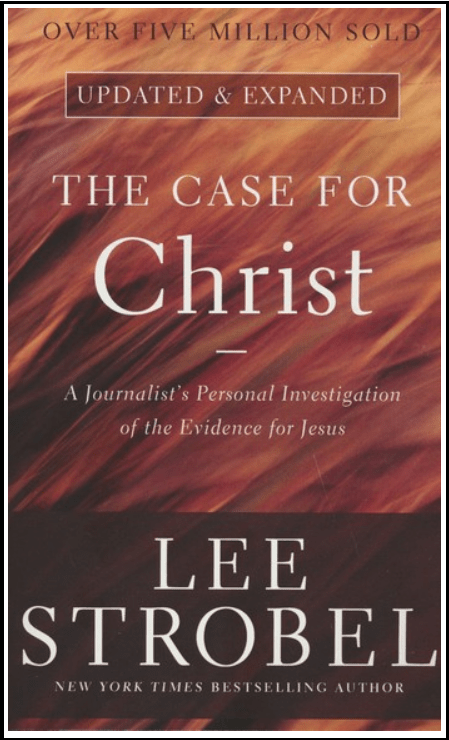
I hope you can join me for next week’s episode. I’ll be sharing another feature of a favorite book/author. Next week’s featured author will be Lee Strobel, author of The Case for Christ: A Journalist’s Personal Investigation of the Evidence for Jesus.

Be sure to tune in, and if you enjoy these Podcasts and Blogposts, please share with your friends, family, or whomever! My many thanks—in advance!

God bless.

Greetings once again friends! This is Episode 17 of the podcast. The title of this week’s episode is “Attitudes of Grace”

In today’s episode, I’ll be sharing some thoughts about The Economics of Godly Relationships, whether in the home, among friends, or interacting with other people wherever we may be.

Click HERE to listen to the audio podcast at https://anchor.fm/goodlifenews.


It occurs to me that the single most fundamental truth of the Universe is identified by one word: Relationships.

Seriously.

Can you think of ANYTHING AT ALL that isn’t in relationship to something—or someone—else? My guess is no. If you can think of something, please let me know. Otherwise, from what I’ve seen and experienced in my 76 trips around the sun, it looks to me like every thing imaginable—animate or inanimate—exists in relationship to everything else.

  • On the cosmic level the earth, moon, planets, and sun all relate to each other.
  • The entire solar system relates to the wider Milky Way galaxy.
  • Our galaxy relates to other galaxies, etc.
  • Looking the other way into a microscope, we discover smaller and smaller dimensions. Everything there also reveals the constant reality of relationships. Cells, membranes, molecules, atoms, electrons, protons, and nuclei all work together to compose what we call “matter.”
A Great Spiral Galaxy in Space

Photo credits:
Galaxy: bitcoinist.com; Root: istockphoto.com

Microscopic image of the root of a buttercup (crowfoot) plant – Ranunculus repens. The propeller shaped pattern on the right is the vascular tissue for transporting water and nutrients up and down the plant.

Living things—at least as we know them here on our planet—all exist in relationships, both to inanimate nature, and to other living creatures.

And, we human beings live in relationship to it all.

So, let’s talk about us.

Everyone lives in relationship to other people. The quality of our relationships determines the quality of our lives—and for we who are Christians it determines the effectiveness of our witness as ambassadors of the Kingdom.


In Matthew 5, the opening passages of the Sermon on the Mount, Jesus teaches numerous important lessons about relationships. He speaks of anger, love and lust, divorce, vows, revenge, and loving one’s enemies.

At the very end of the chapter, in Matthew 5:48, He says, “You are to be perfect, even as your Father in heaven is perfect” (NLT).

I’d encourage anyone listening or reading just now, to get your copy of the Bible, open it to Matthew 5, and read the context of Jesus’s instruction here in verse 48.

Frankly, I’ve heard many outrageous claims that Jesus meant that we—his followers—must strive for and achieve complete perfection of character in this life. Otherwise, we can’t be saved in His kingdom and we won’t be “ready” for His return.

Some of my more conservative Seventh-day Adventist friends underscore that idea with one of their favorite comments from Ellen G. White, who is widely looked to for inspired counsel and interpretation of the Scriptures.

About this idea of perfection of character, Mrs. White says, “Christ is waiting with longing desire for the manifestation of Himself in His church. When the character of Christ shall be perfectly reproduced in His people, then He will come to claim them as His own” (Christ’s Object Lessons, p.69).

Again, let me repeat what I said a few moments ago about Matthew 5—Read The Context! Someone once said, “A text without the context is a pretext for a prooftext!”

Repeatedly in this entire chapter where Ellen White writes about Jesus’s parable of the sower in Mark 4:26-29, she says that character development is the work of the Holy Spirit residing in the believer’s heart. Nowhere does she say this is to be accomplished—in whole or in part—by the human agent! It’s all about God who “works in [us] both to will and to do of His good pleasure” (Philippians 2:13).

I really like the way the NLT treats that verse. It says, “God is working in you, giving you the desire and the power to do what pleases Him.”

So, about Matthew 5:48—if you read the context, you discover that the “perfection of the Father” Jesus speaks of here is about our relationships and how we treat other people!


With those thoughts in mind, let’s consider for a bit the Economics of Godly Relationships. (Using economics as a metaphor is a good way to understand how relationships work.)

If you were to start a business today, one of the first factors you’d need to consider is your start-up capital. How much money—or other resources—do you have in hand to bring your idea to life? Will it be sufficient to cover all the start-up costs, including inventory, required licensing fees, initial advertising, equipment, rental expenses, and (if you need to hire help) salaries of employees?

Here’s a hard reality: Even the very best idea for a new business will go nowhere if it has nothing to build on.

So, let’s apply that thought to building strong, healthy relationships in life.

Every baby receives an endowment “capital of goodwill” at birth. When the baby is born, the first thing that happens is someone–doctor, nurse, mid-wife, mother herself, father, whomever, SOMEONE (!) has to make sure the newborn is breathing, get’s cleaned up, and nurtured.

(I’m speaking, of course, in the normal process of life events. I am all too well aware of tragic exceptions. But, that’s not my focus at the moment.)

We receive our gift of “goodwill capital” from parents, teachers, friends, and others who care for us. We could not survive for even a few hours without someone else supplying our basic needs for life.

Jesus spoke of the natural disposition of parents to provide good things for their children as He addressed the crowd that day on the mountainside.

“You parents—if your children ask for a loaf of bread, do you give them a stone instead? Or if they ask for a fish, do you give them a snake? Of course not! So, if you sinful people know how to give good gifts to your children, how much more will your heavenly Father give good gifts to those who ask him.”

Matthew 7:7-9 NLT

So, the next question is, What do we do with that initial capital of goodwill we receive at birth, and (ideally) at the beginning of every new relationship afterwards?

Just as the initial start-up capital for a business must be managed wisely, so our goodwill capital can be invested to provide positive returns.

Jesus answered this question in Matthew 7:12, “Do to others whatever you would like them to do to you. This is the essence of all that is taught in the law and the prophets” (NLT).

Here is a truism that works in nearly every situation:

Goodwill multiplies when it is given away.

Origin Unknown

I grew up as a farm kid. We often planted corn and/or sugar beets every year. After the fields were prepared, we buried the seed in the dirt at the appropriate depth for each crop. After that we watered and watched for a few days. In a short time we could see the beginnings of tiny shoots poking their heads up out of the soil. It always brought us joy when we could see all the rows stretching across the field.

All summer through the growing season, we invested time, fertilizer, weed control, and more water. At harvest, our investments paid multiplied dividends. Some years the return was bountiful. Other years, not so much. But, regardless, in order to receive a harvest we had to keep investing in the crop.

Relationships are the same. What relationships do you value the most? That’s where you need to make the heaviest investments—in whatever form needed to nurture the health, well-being, and continued growth of your connection with someone. What do you need to invest in the life of someone you love? I’m sure you probably already know the answer to that question. If not, ask God to give you wisdom. You can claim the promise found in 1 John 1:5. (Look it up. Mark it. Memorize it.) It will give you courage and hope.

Remember, “Goodwill multiplies when it is given away.!”

It is vital to make continuous, regular, and frequent deposits in your goodwill account with anyone you love and cherish. And, conversely, it is crucial that you NEVER make a personal withdrawal from that account by acting in a nasty, selfish, demanding, or demeaning way.

Unkind words can never be retrieved once we’ve let them escape our lips. It is good to pray for the fruits of the Spirit to be manifest and evident in our lives every day—the fruit of love, joy, peace, patience, kindness, goodness, faithfulness, gentleness, and self-control (Galatians 5:22-23). I mentioned these in last week’s episode, but they bear repeating often.


And, here’s a final thought as we close off this episode of the GoodlifeNews! Podcast, and the ideas about the Economics of Godly Relationships.

What should you do if someone else has “wronged” you and impacted your life negatively? In essence, that person made a withdrawal from the account of goodwill you hold in common. It may be large or small, a mountain or a molehill. It makes no difference. That individual is “in debt” to you because of their words or actions.

Can you ever get repayment?

In a word, no.

Regardless of future apologies, positive experiences, or good intentions, the debt can never be recovered. The only way of “getting even” in this life is to do or say something negative in return. I’m sure you can immediately see where that leads. Tit-for-tat revenge can only escalate until the situation becomes irreversibly destructive.

But, there is another way—the Jesus way. That way is to forgive. Christian history in every culture is filled with stories of healed hearts when people choose forgiveness.

Damaged relationships may or may not be restored. Sometimes there has just been too much “bad blood” between parties to restore the goodwill account to functional life. But, choosing to forgive removes the weight of that debt from your heart, and frees you to live!

That is, in fact, what God has done for us. He has collected all our “debts” (i.e. sins) and forgave them all! In Him we are “debt free!”

Praise the Lord! Forever, and ever. Amen!


Thank you so much for listening today! I pray you have been blessed.

I hope you can join me for next week’s episode. I’ll be sharing some thoughts about a Christian’s new life in Christ.

Be sure to tune in, and if you enjoy these Podcasts and Blogposts, please share with your friends, family, or whomever! My many thanks—in advance!

God bless.

Greetings once again friends! This is Episode 16 of the podcast. The title of this week’s episode is “The Fruit of The Spirit”

In today’s episode, I’ll be sharing some thoughts about spiritual fruitfulness as expressed by the Apostle Paul in Galatians 5:22-23.

Click HERE to listen to the audio podcast at https://anchor.fm/goodlifenews.


Over 21 years ago, in the Spring of the year 2000, my wife Ruth and I did something I never in my wildest dreams ever imagined I could ever do in this life.

We climbed Jeba Musa—the “Mountain of Moses—the traditional “Mt. Sinai” in the southern part of the Sinai peninsula in Egypt.

The Lord had blessed us with the opportunity and privilege of leading a small tour group visiting the Holy Land. Previously, we had spent several days with our group touring Israel, visiting many sites of historic and biblical significance. The final leg of our trip took us into Egypt.

Jeba Musa (“The Mountain of Moses”) aka “Mt. Sinai”

St. Catherine’s Monastery

The first stop in Egypt was Mt. Sinai, where we toured St. Catherine’s Monastery built at the foot of the mountain. St. Catherine’s is the oldest working Christian monastery in the world. Construction was completed in AD 565. It’s belongs to the Eastern Orthodox church, and contains many significant icons and other Christian artifacts of great antiquity.

While we were still on the bus approaching the area where we would stay for the night, our tour guide announced that there would be an opportunity the next morning for anyone interested to climb the mountain! There is a well-used path many tourists use for this once-in-a-lifetime experience.

Of course, Ruth and I immediately raised our hands to join the climb! We had to wake up around 1:00 a.m. to start the trek to the top. There were hundreds of other tourists making the same pilgrimage we were. Fortunately, it was a crystal-clear night, the stars were shining brightly as we began the ascent.

We had some wonderful experiences that night, but most of those will have to wait for another time. Today I want to share what—to me—was a profound spiritual truth I learned on that mountain trail.

There were several individuals in our climbing group. The others—including my wife—were all much faster than me. They trudged ahead while I plodded along at a slower pace. Soon I had lost all track of them in the darkness and among the climbing crowd.

But I kept going. The night air was cold, but not bitter. The only wind was a gentle breeze that helped cool our bodies from the exertion of climbing. At one point, I stopped to rest for a few minutes, leaning my back against the mountain boulders beside the trail.

I felt the rocks with my hands and pressed my cheeks against them, enjoying the coolness of the stone. Suddenly, in that moment a flash of insight burst into my mind.


“The Mountain Doesn’t Care!”


If you’ve ever taken any training in wilderness survival, the first thing you are taught is that the wilderness doesn’t care about you. You can enjoy it all you want, and with adequate training you can usually do so with complete safety. But, the wilderness can—and will—kill you if you don’t live by its rules!

My mind then immediately turned to my lifetime of Bible reading. The Apostle Paul’s metaphor comparing Mt. Sinai and the Heavenly Jerusalem, found in Galatians 4 flooded into my mind. In Paul’s analogy, Mt. Sinai represents the Law, which cannot save those who disobey or disregard its rules.

Here I was, standing on a mountain generally thought to be the Mt. Sinai of the Exodus story in the Old Testament. I was leaning against a cold wall of stone bordering the trail leading to the summit.

“The mountain doesn’t care! It will kill you if you don’t live by its rules!”

The truth of that reality made a deep, life-long impression on my spiritual heart. Only grace—only love—can forgive and offer life to a soul condemned to death by the law. Grace and love can only come from a living person capable of compassion and caring.

It’s true, the mountain (i.e. the Law) cannot save, but the One who is the Creator of the Law can!

And, like my climb up Mt. Sinai on that cold, clear night, I knew I had friends at the top. Even so, when we realize the condemnation of the cold, uncompromising Law, we can also know that the Author of the Law is alive. He is our Friend, and He saves us from the certain death of sinners.

“There is now no condemnation for those who belong to Christ Jesus. And because you belong to him, the power of the life-giving Spirit has freed you from the power of sin that leads to death” (Romans 8:1-2).


With those thoughts in mind, lets go back to Paul’s message to the Galatian church.

In chapter 5 of this letter, Paul turns to the issues of godly living, and the power of witness by Christian believers. He says, “You have been called to live in freedom . . . . But don’t use your freedom to satisfy your sinful nature. Instead, use your freedom to serve one another in love” (Galatians 5:13).

He says, “Let the Holy Spirit guide your lives. Then you won’t be doing what your sinful nature desires” (verse 16).

The Apostle then proceeds to list a whole litany of evil practices that grow out of an unconverted heart. You can read his entire list in Galatians 5:19-21. His list is pretty graphic, and I won’t list them all out here, but it’s well-worth reading for awareness of the carnal nature of our sinful desires.


The place I want to spend the rest of our time together today is in verses 22-23. I would seriously encourage you to find these verses in your own copy of the Bible. Circle them, underline them, and memorize them! Paul says there’s no law against these fruits of the Spirit!

(As an aside, I now include the “fruit of the Spirit” in my daily personal prayer every morning. I pray that the Holy Spirit will manifest and make evident these nine spiritual fruits in my life, so that my witness for Jesus will not be compromised by any words or any actions that would in any way “throw shade” on Him. I truly want my entire life to be a testimony of His love and grace.)

So, let’s look briefly at the 9 fruits of the Spirit.

(Frankly, each of these fruits could be the subject of an entire sermon, chapter in a book, or a separate episode for the podcast, but today we’ll consider them together as a composite body of character qualities God wants to produce in us as we relate to the world around us.)

  1. Love—This is agápe love. Unconditional, unending, love as a principle which He wants to reproduce in the heart of every believer so unbelievers can see Him in us.
  2. Joy—The presence of the Holy Spirit brings true joy to us, regardless of difficult—or even bitter—circumstances surrounding us.
  3. Peace—With the Spirit’s abiding joy present in our heart, we have the “peace that passes all understanding” (Philippians 4:7). The New Living Translation expresses this as “God’s peace, which exceeds anything we can understand.”
  4. Patience—The 4th “fruit” of the Spirit is “patience.” The NLT Dictionary/Concordance included as an appendix in my “Life Application Study Bible” defines “patience” as “the power or capacity to endure without complaint something difficult or disagreeable; forbearance, longsuffering.”
  5. Kindness—Many years ago two of my colleagues and I were quite unhappy about the administrative practices of our mission president. We huddled together to draft a strong letter of our feelings, but before we began, one of my friends said, “You know, whatever else we might say, we must be kind.” I’ll confess, that was a pointed and powerful godly rebuke to us. I believe it was from the same Spirit who also inspired the Apostle Paul to write to the Ephesians, “Be kind to each other, tenderhearted, forgiving one another, just as God through Christ has forgiven you” (Ephesians 4:32).
  6. Goodness—The Bible is abundantly clear, there is no innate “goodness” in the sinful heart of human beings. The Old Testament prophet Isaiah says it so clearly, “We are all infected and impure with sin. When we display our righteous deeds, they are nothing but filthy rags” (Isaiah 64:6). However, the Holy Spirit can—and does—work within us, giving us “the desire and the power to do what pleases him” (Philippians 2:13).
  7. Faithfulness—Once again, referring to the NLT Bible Dictionary/Concordance, “faithfulness” is defined as “the quality of steadfast loyalty or firm adherence to promises.” The truth is, it is the Holy Spirit who inspires us to faithfulness. Are you a “man or woman of your word?” Can people rely on you to do what you have promised? Broken promises are the stuff of cynicism and skepticism in the political arena. We’re all too familiar with the concept of “campaign promises!” We must not be that way! If we tell someone we will do something, we must do all in our power to fulfill our promises. That is the very foundation of trust and respect in all relationships.
  8. Gentleness—I recently completed reading a biography of the late Fred Rogers, the star and inspiration of Mr. Rogers’ Neighborhood television show for young children. I was truly impressed with the testimonies of those who knew him best who—to a person—spoke of his gentle way of dealing with people, especially children. One anecdote that stuck in my mind was of a time he was eating out with family and friends in a public restaurant. Naturally shy, and not wanting to call attention to himself, Fred and the dining party were seated at a table in a discrete corner of the restaurant. In the middle of their meal, a very young boy, maybe 2 or 3 years old, saw Mr. Rogers and recognized him from the show. The little fellow came running over to the table and stood in front of his hero. He spoke to Mr. Rogers and announced to him, “My puppy died.” Without missing a beat, Fred Rogers slipped out of his chair and onto his knees so he would be eye-to-eye with the little child. There he gently talked with him about loss, grief, and comfort. Would that we all could be so discerning to the emotional needs of those around us, whether they are young or old. In this time of increasing tensions everywhere in society, perhaps we could all take a cue from Mr. Rogers, and pray that the Spirit of God grant us the fruit of gentleness in our daily relationships with all.
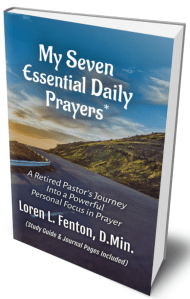
  9. Self-control—While writing about “temperance” for my book My Seven Essential Daily Prayers, I made an incredible discovery. The expression is now usually translated as “self-control” in newer versions of the Bible. The original biblical Greek word is “egkrateia” (pronounced “eng-kra-TIA”), which means “true mastery from within.” It embodies the concepts of total self-control, self-discipline, self-mastery, and self-restraint. It could be defined as “true personal righteousness.” Wow! That’s heavy! I think we all realize that—in our own strength—those goals are impossible to achieve. Yet, with the indwelling power of the Holy Spirit, by the grace of God’s love and presence, the fruit of “temperance” or “self-control” can be realized, both within our heart, and in all our outward relationships.

May all these fruits of the Spirit grow and flourish daily in each of our lives as we move forward as ambassadors for the Kingdom of Heaven!


Thank you so much for listening today! I pray you have been blessed.

I hope you can join me for next week’s episode. I’ll be sharing some thoughts about godly relationships and our calling to choose attitudes of grace.

Be sure to tune in, and if you enjoy these Podcasts and Blogposts, please share with your friends, family, or whomever! My many thanks—in advance!

Oh, and one more little housekeeping note. All the Scripture quotations used in this episode of the podcast and blog are taken from the New Living Translation. I purchased the NLT Life Application Study Bible a few months ago. I’m finding incredible blessings as I read and study from this fairly recent version. If you are looking for a new Bible, you might take a look at the NLT. I think you may enjoy it as I have.

Anyway, that’s all until next week!

God bless.

Greetings once again friends! This is Episode 15 of the podcast. The title of this week’s episode is “What Are Your Motives?”

Have you ever asked yourself, “Why do I do what I do, anyway?”

What Drives Our Decisions???

In today’s episode, I want to explore a few sometimes obvious, sometimes not-so-obvious underlying factors that drive our ideas, attitudes, decisions, relationships, and accomplishments.

Click HERE to listen to the audio podcast at https://anchor.fm/goodlifenews.


Why do we feel a sense of great accomplishment when we reach some goals, and feel disappointed or even deflated with others?

What might be a “guiding star” for living the kind of life God wants us to live? Could knowing that really make a difference in our level of satisfaction as Christians?

Let’s think about that for a few minutes.

There’s a fascinating story found in the Old Testament Book of Joshua. This incident takes place after the campaigns to conquer the Promised Land have been mostly completed. Previously, two-and-a-half tribes of the Israelites had chosen lands east of the Jordan River for their permanent settlements. But, before they could settle down to the business of daily life, Joshua required the men of those tribes to accompany Israel’s armies crossing the Jordan so they could help secure the land for the rest of the nation. Joshua promised them that when the task was finished, they could then return to their families east of the river.

When their work was done, the men from the tribes of Reuben, Gad, and the half-tribe of Manasseh headed home. However, before they crossed the Jordan they stopped to build a large altar—a copy of the altar to be built in Jerusalem.

When the rest of the Israelites heard about this new altar being built, they became incensed, assuming the eastern tribes were rebelling against the clear instructions of the Lord regarding the central location for national worship events. They basically said, “We’ve got to put a stop to this immediately!” and a delegation headed down to the Jordan to confront the “rebels”—which they assumed them to be.

When they got there, however, they discovered that things weren’t what they thought.

The leaders of the eastern tribes explained, “We didn’t build this altar in rebellion. Instead, we built it as a memorial so that future generations of our descendants and your descendants will know that we all belong together even though our territories are separated from the rest of Israel by the Jordan River.”

That explanation satisfied the delegates, and they returned home to report that all was well.


Well, as I’m sure you are aware if you’ve read this story in the Bible, I’ve greatly abbreviated it and left out quite a few details. However, if you want you can read the story in its entirety in Joshua 22:1-34.

Even so, there are several motivational factors here for us to examine as we look into our own hearts.


The Need to Belong

Without getting too deep into the weeds of “pop-psychology,” the need for belonging lands right in the middle of Abraham Maslow’s famous “Hierarchy of Needs.” (If you want to know more about Maslow’s theory, click HERE, or on the graphic to the right.)


Everyone needs basic things like air, water, food, etc. We also need a sense of safety and security or we can’t really do much of anything else until those are in place.

Once those elements of our life are in place, however, we also need very much to “belong” to a group—family, club, social clique, political party, faith community, or any other grouping of fellow human beings you can imagine. A group may be as small as two or three individuals, or it may include millions. The size is not important. Regardless of the scope, the point is to be connected.

Most of us truly want to fit in, to belong, to be recognized and accepted as part of a group—large or small. That need may drive us to make tragic decisions, as Country singer Johnny Lee sang about many years ago in his signature song, “Lookin’ for Love in All the Wrong Places.”

The ancient Israelites instinctively knew this. They knew that their long-term existence as a nation in the new “Promised Land” could not survive if they didn’t stay together. Sadly, their subsequent history tells the tragic story of national disintegration when they lost those all-important connections.


The Truth Shall Make You Free

A friend of mine who was a student of Dr. Edward Heppenstall, quoted him as saying in class, “The mark of a mature mind is to withhold judgment until all the facts are in.”

Oh! How often we jump to conclusions before we know all the facts of a situation!

The heads of the Israelite tribes west of the Jordan, together with their religious leaders, assumed the worst when they heard about those “rebel” tribes east of Jordan building a “forbidden” altar. They were immediately ready to lead the armies of Israel into battle against their brothers whom they assumed to be in violation of the clear instruction from Yahweh. They were driven by the ideal of preserving the integrity of the nation’s loyalty to God, regardless of the cost in bloodshed, national distress, or wasted lives.

As Christian believers in our “here and now,” it is often too easy for us to base our thinking, decisions, and actions on unverified assumptions, or on emotions of anger, excitement, or misplaced loyalties. If we are to live the “abundant life” of witnessing for God as his “ambassadors,” it is vitally important that we make choices intelligently and with as much information we can gather. Otherwise, we run a serious risk of misrepresenting him, perhaps presenting a less-than-attractive picture of our God—the God of agápe love, forgiveness, and amazing grace.

Fortunately, in this story from ancient Israel, someone had the wisdom to suggest, “Perhaps we should go ask those tribes why they are building that altar down by the Jordan.” Certainly by the grace of God, they decided to send the delegation first, and the result was restored confidence in the loyalty of those eastern Israelites.


Loyalty

Who, or what, holds your greatest loyalty?

In the story of those ancient Israelites, both sides of the impending conflict were fully loyal to the new nation of Israel. While one side did question the loyalty of the other side for a time, nevertheless the apparent problem of the moment was solved by wisdom and understanding.

Obviously, it may not be possible to resolve all potential conflicts so nicely, but as a general principle, “a gentle answer deflects anger, but harsh words make tempers flare” (Proverbs 15:1 NLT). If “warring” parties basically agree on common values, usually it’s possible to work out perceived differences, and move forward in restored harmony.

A major consideration about loyalty for Christians is balancing our supreme loyalty to God and His purposes in the world with the many allurements the world offers us.

We might be motivated by the lure of fame and fortune, fun times, lust, political power, “righteous” indignation, failing health, looming deadlines, or a host of other demands. We can think we have total confidence that we’re doing whatever for all the right reasons, when in fact we may have once again fallen into the trap of choosing self-loyalty, or group loyalty, or worldly-goal loyalty over our calling of complete, primary loyalty to the God of Heaven and the principles of His Kingdom.


Values

It really all boils down to our personal values. What is most important to us mentally, emotionally, physically, or spiritually?

In the Garden of Eden, Adam and Eve chose to value the taste of forbidden fruit over loyalty to their Creator. In complete contrast, Jesus—in the Wilderness of Judea, and in the Garden of Gethsemane—chose loyalty to the Father’s will to accomplish the divine purpose of redeeming Adam’s race. Jesus was victorious where Adam failed. Jesus chose self-sacrifice where Adam had chosen self-indulgence. Jesus chose suffering, pain, and loss as the price of man’s salvation, where Adam had chosen an empty promise from the arch-deceiver in the hopes of gaining access to the power of secret knowledge.

So we must ask ourselves this question: What, or whom, do we value most? An honest, no-holds-barred inventory of our inmost soul must be done. When we do that we discover that indeed, every one of us is included in the statement “All have sinned and come short of the glory of God” (Romans 3:23).

If that were the end of the story, we could only despair. All roads lead to the Babylon of humanistic achievement, but ultimately end in destruction, decay, and death. The devil’s promises are empty wind.

But, God does not leave us hopeless! Jesus was motivated out of agápe love to choose the way of the cross to accomplish our salvation. Agápe love is revealed as the greatest motivational force in the entire Universe. Agápe love begets agápe love, and as we choose God’s love it is reproduced in our own soul, motivating us to greater loyalty, larger service, and better living—all for the glory of God and the benefit of others.


Thank you so much for listening today! I pray you have been blessed.

I hope you can join me for next week’s episode. I’ll be sharing some thoughts about Spiritual Fruitfulness — looking at Galatians 5:22-23.
Be sure to tune in, and if you enjoy these Podcasts and Blogposts, please share with your friends, family, or whomever! My many thanks—in advance!


Greetings once again friends! This is Episode 14 of the podcast. The title of this week’s episode is “N. T. Wright: British Theolgian and Clergyman.”

Just as a reminder if you didn’t catch my announcement last month, in the broadcast schedule for the GoodlifeNews! Podcast and Blog, I’ve designated the first episode of each month to feature a favorite author and/or book that I have found uplifting, entertaining, and inspiring.

Reading has always been a huge part of my life since before I started formal schooling as a child. I have literally read hundreds—if not thousands—of books over my lifetime. Not a few have had a profound influence in how I think, broadening my horizons, giving me new perspectives, and teaching powerful principles for living.

I’m anxious to share some of those books, as well as favorite authors, with our GoodlifeNews! Podcast Villagers! So, as we move along, each month I’ll choose another author or book to highlight and share with you.

I hope you will be inspired to pick up a book and read it for yourself. It doesn’t have to be one I talk about, but reading itself is so important I want to do whatever I can to encourage everyone to make a regular habit of reading great books.

Click HERE to listen to the audio of this episode on Anchor.fm/goodlifenews, or another podcast platform platform.


N. T. Wright
British Theologian and Clergyman

N. T. Wright is the former Anglican Bishop of Durham, England, and author of more than seventy books, including Surprised by Hope, The Last Word, and The Meaning of Jesus, with Marcus Borg. He taught New Testament studies for twenty years at Cambridge, McGill, and Oxford universities. (Adapted from the back flyleaf of Simply Christian: Why Christianity Makes Sense.)


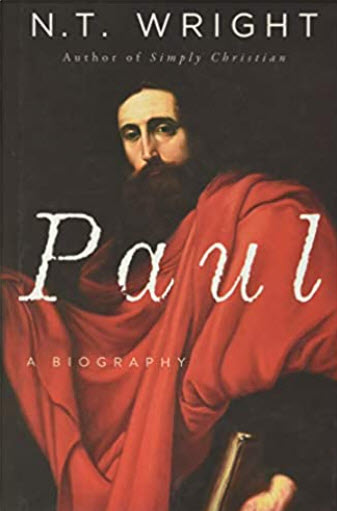
I became an instant fan of Dr. Wright’s books when I first listened to an audio version of Paul: A Biography that I discovered on audible.com. Listening to that volume inspired me to order a print copy to have in my library. I also enthusiastically shared it with my wife, who also found it profoundly moving.

I’ve been a serious Bible student ever since my high-school days when, at age 16 I gave my heart to Jesus, and invited Him into my heart to be my personal Savior and Lord. Through the years, God has led me on a journey of ever-deepening, ever-widening understanding of scripture. I have experienced many “watershed” moments on this spiritual journey.

Listening, and then reading Dr. Wright’s material in the last few months has provided yet another of those moments.

Here are three of Dr. Wright’s books which I have read recently:
(Click on the picture for more information)

Simply Jesus
Paul: A Biography
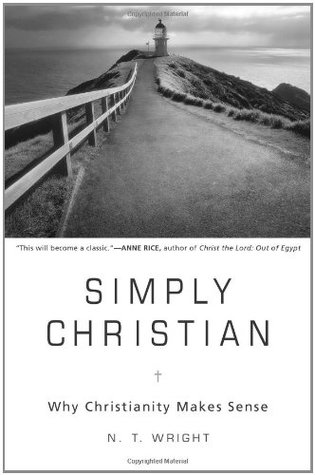
Simply Christian
  1. Simply Jesus: A New Vision of Who He was, What He Did, and Why He Matters.
  2. Paul: A Biography provides a wonderful portrait of the apostle’s life. It’s a large book of 432 pages, plus copious footnotes, a detailed scripture index, and an exhaustive subject index.
  3. Simply Christian: Why Christianity Makes Sense.

I will share some thoughts about each of those three books in a few moments, but first, I want to give you some added details about Dr. Wright himself.

Nicholas Thomas Wright was born December 1, 1948 in Morpeth, Northumberland, United Kingdom. Northumberland is England’s northeastern-most county, bordering Scotland on the north, and the North Sea to the east. It is England’s least densely populated county, currently having only 62 people per square kilometer. The countryside is dotted with small towns and the ruins of ancient castles from the days of old. Today, tourism provides a major source of income for the locals.

From all indications “Tom” (as he was called) was a spiritual child from a very young age. In an interview in 2003, Dr. Wright recalled a time when—at around 4 or 5 years of age—he was “sitting by myself at Morpeth and being completely overcome, coming to tears, by the fact that God loved me so much he died for me. Everything that has happened to me since has produced wave upon wave of the same.”

In the course of time, “Tom” became “Dr. N. T. Wright FRSE.” When I first read those initials after his name I had no idea what “FRSE” meant. A short search on the Internet, however, revealed that these letters stand for “Fellowship of the Royal Society of Edinburgh,” Scotland’s national academy of science and letters. Individuals granted a “fellowship” in this society have been judged to be “eminently distinguished in their subject.” In other words, this is a pretty nerdy, geeky club for intellectuals and super-achievers.

Regardless, the few books by Dr. Wright that I have read—while addressing some very deep theological concepts—never come across as stuffy intellectualism or snobbish superiority. On the contrary, even though Dr. Wright’s scholarship is impeccable, his writings reveal that same deep spiritual experience he sensed as a child, still moved by God’s love and sacrifice for him—a sinner the same as anyone else.


So, let’s take a look at those three books I mentioned a bit ago. First up is Simply Jesus.

Simply Jesus

I chose Simply Jesus first, not because it was Dr. Wright’s first published book, nor because it was the first one I read. It is neither. Instead, as one reviewer stated, “No one living today is writing more thoughtfully and compellingly about Christian theology than N. T. Wright. With Simply Jesus, he takes readers on an illuminating expedition to recover the Christian Messiah. If you have not read Wright, start now, and start with this book.”

Another reviewer said, “Somewhat to my surprise, I felt that, in reading Simply Jesus, I was really coming to know Jesus better; reading Simply Jesus, I actually felt Him near.”

I totally agree with these reviewers! The word pictures inspire vivid visual images in the mind’s eye as Dr. Wright deftly addresses who Jesus was, what he did, and why it matters.

He explains,

“Jesus—the Jesus we might discover if we really looked, is larger, more disturbing, more urgent than we had ever imagined . . . . We [the churches] have reduced the kingdom of God to private piety; the victory of the cross to comfort for the conscience; Easter itself to a happy, escapist ending after a sad, dark tale. Piety, conscience, and ultimate happiness are important, but not nearly as important as Jesus himself.”

N. T. Wright, quoted from the flyleaf

The most striking word picture I carried away from this book is the impending “perfect storm” clash between Imperial Rome and the fiercely determined, politically driven Jews. Judea, of course, was to the Romans a small, backwater corner of their great empire. On the other hand, to the Jews the Romans were an occupying army, reminiscent of Greece, Medo-Persia, and Babylon. Especially Babylon. And even further back, Assyria and Egypt. The Jewish mindset was that the appearance of the “Conquering King” Messiah of Old Testament prophecies would signal the fall of Rome, and bring about a restored Jewish empire even greater than the glory days of Kings David and Solomon.

But Jesus was not the Messiah they expected. He came as a “Suffering Servant” instead of a “Conquering King.” Rather than marching with swords against the Romans, Jesus came with an entirely different kind of kingdom—a kingdom of love, peace, humility, caring, kindness, and self-sacrifice. The Son of God—in the weakness of human flesh—walked into the no-man’s-land between the powerful Roman armies and the Jewish zealots, carrying a message of victory through grace and agápe love. Neither the Romans nor the Jews knew what to do with that kind of warfare, and they ended up conspiring together to kill this unorthodox Messiah-King.

The way of the cross brought their ultimate demise, but gained the greatest victory in the history of the world.


Paul: A Biography

As I briefly mentioned above, Paul: A Biography provides a wonderful portrait of the apostle’s life. It’s a large book of 432 pages, plus copious footnotes, a detailed scripture index, and an exhaustive subject index. The audio version takes over 15 hours listening at normal speed!

In this presentation of the apostle’s life, Dr. Wright offers a new way of understanding the man Paul and his extraordinary life. Rather than a simple recitation of time-line events, Dr. Wright weaves together contemporary cultural, political, and religious forces present in the context of Paul’s lifetime. He explains the zealotry that fired the young Pharisee Saul’s severe persecution of the growing body of Christ’s followers.

Then came the Damascus Road experience when everything changed. Saul, the persecuting Pharisee, became Paul, the great advocate of the gospel of grace and the true Messiah-ship of Jesus of Nazareth.

Dr. Wright writes in-depth accounts of the Apostle’s life events, including broad pictures of social conditions everywhere. He shows the powerful effects of Paul’s testimonies wherever he traveled. He explains the background issues causing disruptions in the churches, and Paul’s letters addressing those needs. Reading (actually, listening to) this book significantly broadened my understanding of the times and places of the New Testament story. My awareness of behind-the-scenes conditions of life for Paul and his contemporaries was expanded many times over.

One major result for me that grew out of reading Paul is that I was inspired to do a “deeper dive” into the Book of Romans, which Dr. Wright explains contains the best and most complete expressions of Paul’s theology. To do this I went to a Christian bookstore and purchased a new Life Application Study Bible of the New Living Translation. I do not have the words to express the power and depth of spiritual growth this has brought me. At this time of my life, it almost feels like I am just beginning to discover the truths God has been waiting all this time to share with me.

For real. I stand in awe at what God is doing.

Paul: A Biography has been a powerful catalyst opening a new chapter in my walk with God.


Simply Christian

The last book of N. T. Wright’s that I want to share with you in this episode is Simply Christian.

This is the most recent book I’ve read of Dr. Wright’s. It was actually written previous to Simply Jesus or Paul: A Biography.

Since I had read the other two books previously, I chose this one in which he lays out some of the basic concepts he develops more in depth in later writings. Reading Simply Christian after reading the others is somewhat like checking the recipe after enjoying a delicious dinner dish. For me, it doesn’t detract from the joy, but actually enlarges it as I discover the earlier seeds of understanding.

In Simply Christian, Dr. Wright meets head-on with questions Christianity has struggled with for centuries. Questions such as, “Why do we expect justice?” “Why do we crave spirituality?” and “Why are relationships often so painful?”

In addressing these perennial questions, Dr. Wright “makes the case for the Christian faith from the ground up, assuming that the reader has no knowledge of (and perhaps even some aversion to) religion in general and Christianity in particular” (quoting from the front flyleaf).

Quite frankly, while I did find the book very worthwhile, extremely well-written, and full of compelling reasoned arguments, the author does take some theological positions I find difficult to accept. But, seriously, that’s what he would expect. He makes a strong case that everyone reads the Scriptures through the lenses of their own experience, training, and faith traditions. Dr. Wright would have no problem with me reading the Bible for myself to discover the truths waiting there for incorporation into my life.

Simply Christian has been compared favorably with C. S. Lewis’s classic Mere Christianity. It is written in the same vein—addressed especially to young Christians and inquiring non-believers. Christianity Today commented, “It will confirm, challenge, and deepen your grasp of Christian faith and practice.”

Do yourself a favor. Find a copy of one of Dr. Wright’s books and start reading this week! I don’t think you will be disappointed. And, as I mentioned above, his book Simply Jesus is a great place to begin.


Thank you so much for listening today! I pray you have been blessed.

I hope you can join me for next week’s episode. I’ll be sharing some thoughts about the choices and decisions we make and how we make them. What are the underlying motives influencing our thinking which result in the ultimate outworking of deeds in our lives?

And, just a quick peek farther ahead, coming up on September 6, our featured author will be Lee Strobel, author of The Case for Christ, and other popular Christian books.

Be sure to tune in, and if you enjoy these Podcasts and Blogposts, please share with your friends, family, or whomever! My many thanks—in advance!

God bless.

Greetings once again friends! This is Episode 13 of the podcast. The title of this week’s episode is “The Incomparable Christ.” Click HERE to listen to the audio podcast on Anchor.fm/goodlifenews.


Here are the words to a popular song we used to sing with church kids many years ago:

“Let’s talk about Jesus,
The King of Kings is He,
The Lord of lords supreme,
Through all eternity.
The Great I AM, the Way,
The Truth, the Life, the Door,
Let’s talk about Jesus more and more.”
©Buffum Music Company

Let’s talk about Jesus!

There are several more verses to this song which I never knew about. We only sang the first verse several times in a row, tagging each time with these added words (which I just discovered are not part of the original song!):

"O my loving brother,
When the world’s on fire,
Don’t ya want God’s bosom
To be your pillow?
Hide me ever in the Rock of Ages,
Rock of Ages, cleft for me!"

There’s a lot of great truth in that little song.

Let’s explore a few thoughts and observations as we seek to know more about this Person who is truly “one of a kind” in the entire Universe.


First, I want to briefly explain a biblical Greek word that, sadly, has been somewhat mistranslated into English.

In John 3:16 (and several other verses in the New Testament) the word “begotten” is used to identify Jesus as the “Son of God.”

Most Bible students are familiar with the expression, “God’s only begotten Son.” The use of “begotten” in this phrase stems from an early translation of the New Testament by Jerome of Stridon, who is commonly referred to as “St. Jerome,” or simply “Jerome.” He should not be confused with the Christian martyr Jerome of Prague who lived 1,000 years later.

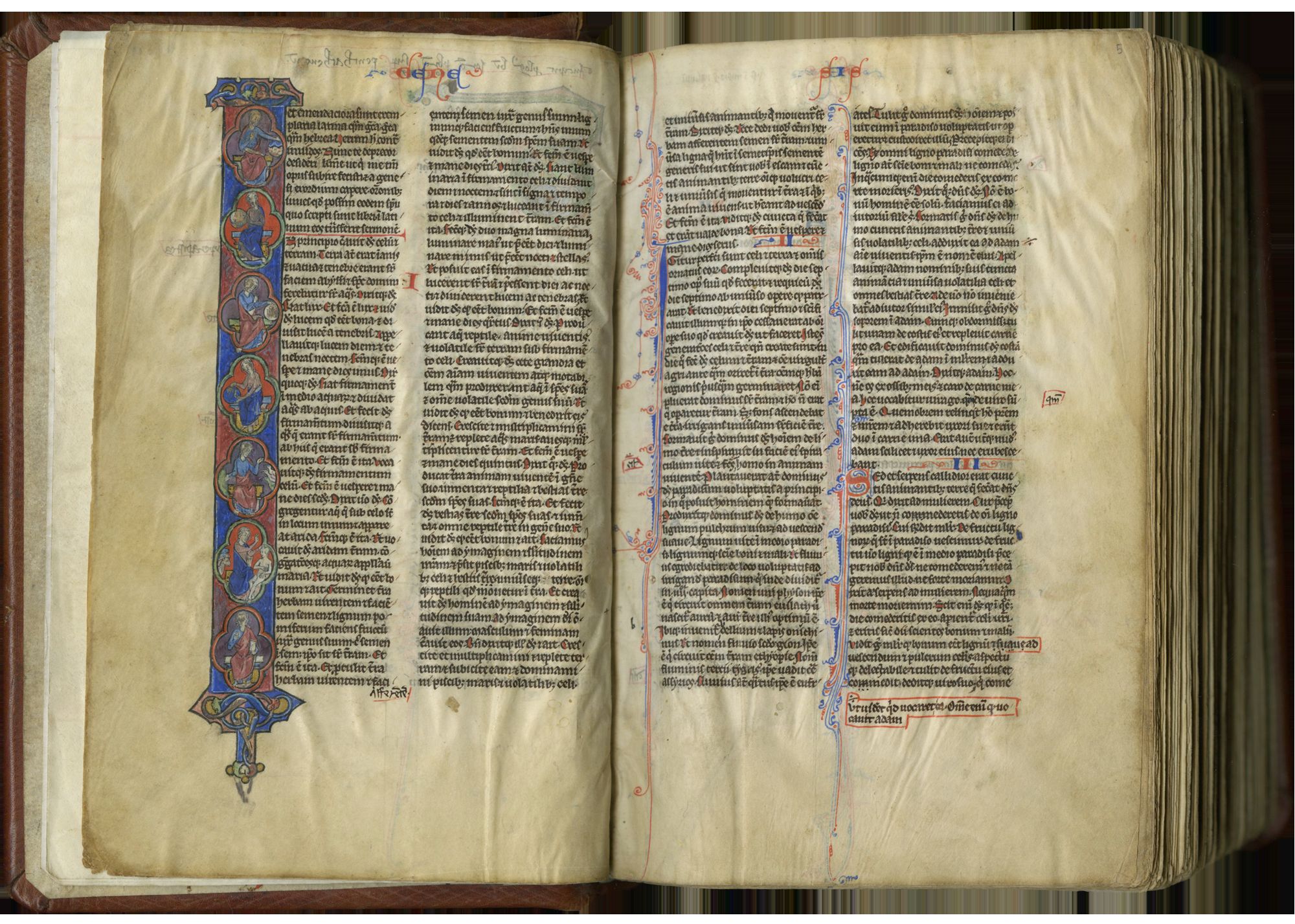
Jerome of Stridon was a Latin priest living in the 4th century A.D., a biblical languages scholar who worked on revising and updating some earlier Latin translations, including the four gospels, Matthew, Mark, Luke, and John. Jerome’s final manuscript is known today in biblical academia as the “Latin Vulgate,” which heavily influenced subsequent translations into English.


For over 1000 years, from c.400-c.1400 A.D. the Latin Vulgate Bible was the only translation of the Scriptures allowed by Rome. Copies such as the one pictured here were laboriously produced by hand, including text and illustrations. Individual commoners were not permitted to own a copy. Most were illiterate. Bibles like this copy were literally chained to a desk in the church.


The Greek word translated “begotten” is “monogenes.”

When translating “monogenes,” Jerome chose a Latin word with the underlying meaning of “procreation,” instead of another similar, but more accurate word, meaning “unique.” Unfortunately, when the early English versions were produced, the translators relied heavily on Jerome’s Latin Vulgate, resulting in the use of a word—begotten—implying that Jesus was in some way created or “birthed” by God the Father. This is simply incorrect, both linguistically and theologically. Begotten was then used in the 1611 King James Version, and due to the 300+ years of the KJV’s dominance in the English-speaking world, begotten became firmly established in the minds of all believers speaking and reading English.

The true meaning, however, is found in the original Greek term, “monogenes,” which literally means, “one of a kind,” or “a completely unique” person.

And, when we stop to think about it, there is no other being in the entire Universe like Jesus! He is uniquely both fully God and fully human.


But, let’s move on.

The little song I quoted at the beginning of this episode lists several important identities of Jesus—King of kings, Lord of lords, the Great I AM, the Way, the Truth, the Life, the Door.

Yes! Jesus is all of those and more! Perhaps in a later episode I can explore those titles of Jesus a little more fully. But for now, I’d like to look at several Earth-bound occupations that could have been natural choices for Jesus in his “made flesh” experience, but which he laid aside to focus on his Father’s mission and purpose.


Carpenter

Around the time of Jesus’ birth in Bethlehem, Herod Antipas began to rebuild the city of Sepphoris, about 5 miles northwest of Nazareth. Herod had designated Sepphoris as the capital city for the province of Galilee, which he began ruling after the death of his father Herod the Great. The building process continued for many years, resulting in the city growing rapidly in both population and importance.

When Joseph the Carpenter returned from Egypt with Mary and Jesus, it is very possible—perhaps even probable—that he looked for work in Sepphoris. The distance from Nazareth was not far, probably only about an hour’s walk each way. With his donkey carrying the tools, Joseph could easily make the commute to and from Sepphoris every day. It’s not unthinkable that as Jesus grew from childhood into his adult years, Joseph might take him along to help with the building projects.

As Joseph’s apprentice—whether in the city or at home in the carpentry shop—Jesus would have mastered the skills of the trade. If that were his mission in life, he certainly could have easily become the best carpenter every to pick up a hammer or a saw. Nevertheless, Jesus knew his mission was not just to build houses or furniture. His mission was “to seek and to save” lost souls for the Kingdom of God. He chose to stay focused on that ultimate goal.

Shepherd

Jesus knew how to take care of sheep! His earthly genealogy line extended all the way back to Abraham, Issac, and Jacob. Jesus came from the line of King David, a shepherd boy who watched his father’s flocks on the hills of Bethlehem. Although there is no biblical evidence that Jesus had direct experience in taking care of sheep, there were certainly plenty around the Galilean countryside for him to observe!

Jesus knew the history of the Jewish people, and he knew the personal interest a true shepherd would have for his flock. In fact, Jesus says, “I am the good shepherd. The good shepherd sacrifices his life for the sheep . . . . I know my sheep, and they know me” (John 10:11, 14).

He also told the wonderful story of the one lost sheep missing from the flock and the shepherd who went searching for it.

Indeed, Jesus could have been an outstanding shepherd. But, instead, he chose you and me to be part of his spiritual flock.

Master Physician

Here’s a thought: no one ever died in the presence of Jesus! Not only that, every dead person he ever encountered he brought back to life! Every sick person who requested his help received healing.

Jesus didn’t need to spend long years in preparation to practice medicine. He healed the diseases, injuries, and fears around him with a touch or sometimes just a simple word of assurance or instruction. The faith of the sick made them whole. He could have become history’s most renowned physician, but, again, he chose the only course which would bring eternal healing and wholeness to the entire body of mankind.

Master Fisherman

One of the greatest challenges for people who fish is where to locate them! In my closet I have a battery-powered sonar fish finder (which I’ve only used once or twice since buying it several years ago). This device is supposed to show you a picture on the screen the location and depth of fish in a lake. I never had much luck with it, probably because I didn’t really know anything about operating it successfully.

But, Jesus didn’t need a sonar fish finder! He knew right where they were, and used his knowledge several times to teach his disciples—who were professional, commercial fishermen—what it meant for them to become “fishers of men.”

Master Builder

I mentioned earlier about Jesus learning carpentry as an apprentice to his earthly father, Joseph. But we must not forget that he—Jesus—was the greatest builder in all the Universe!

Genesis 1:1 — “In the beginning God created the heavens and the earth.”

Colossians 1:15-16 — “Christ is the visible image of the invisible God. He existed before anything was created and is supreme over all creation, for through him God created everything in the heavenly realms and on earth. He made the things we can see and the things we can’t see—such as thrones, kingdoms, rulers, and authorities in the unseen world. Everything was created through him and for him. He existed before anything else, and he holds all creation together” (NLT).

Jesus as the Master Builder also left us with these promises:

John 14:1-3 — “Don’t let your hearts be troubled. Trust in God, and trust also in me. There is more than enough room in my Father’s home. If this were not so, would I have told you that I am going to prepare a place for you? When everything is ready, I will come and get you, so that you will always be with me where I am” (NLT).

And, we must not miss this beautiful description of the home he is preparing for us:

Revelation 21:1-4 — “Now I saw a new heaven and a new earth, for the first heaven and the first earth had passed away. Also there was no more sea. Then I, John, saw the holy city, the New Jerusalem, coming down out of heaven from God, prepared as a bride adorned for her husband. And I heard a loud voice from heaven saying, ‘Behold, the tabernacle of God is with men, and he will dwell with them, and they shall be his people. God himself will be with them and be their God. And God will wipe away every tear from their eyes; there shall be no more death, nor sorrow, nor crying. There shall be no more pain, for the former things have passed away” (NKJV).


Many years ago when I was about 15, I attempted to build a doghouse for our farm dog, Victor. My attempts at building were a total—I mean, TOTAL failure. I tried, but I simply did not know how to join the various structural parts together correctly. What I ended up with was a total embarrassment and a pile of ruined lumber. To this day I can’t believe how terrible it looked.

“My” doghouse project was only saved by my father who stepped in and took over. He was a skilled carpenter with years of experience. Under his able hands, Victor’s doghouse came into existence, and sheltered not only Victor for several years, but all the other successive dogs who followed him on our farm. The doghouse was beautiful, functional, and loved by all the dogs who called it “home.”

Yes, friend, I don’t know who you are or where you are as you listen or read these words right now. But, may I be so bold as to invite you to drop whatever tools you have—tools of your self-will—and pray this prayer:

“Come, Master Builder. Tear down this miserable structure I’ve been trying to build out of my life. Clear away the foundations of my self-sufficiency, and build upon yourself the superstructure of holiness.”

If you humbly present that prayer to Jesus, the Incomparable Christ, I assure you he will answer in the fullness of ways you can only imagine.


Thank you so much for listening today! I pray you have been blessed.

I hope you can join me for next week’s episode. I’ll be sharing some thoughts about several books written by N. T. Wright, the British theologian/clergyman I mentioned in last week’s episode when I shared the “Five Things That Never Change.” If you enjoy deep, but truly insightful, inspiring reading, I know you will find the work of Dr. Wright very worthwhile.

Be sure to tune in, and if you enjoy these Podcasts and Blogposts, please share with your friends, family, or whomever! My many thanks—in advance!

God bless.

Greetings once again friends! This is Episode 12 of the podcast. The title of this week’s episode is “Five Things That Never Change.” Click HERE to listen to the audio version.


It’s no overstatement to say we live in an incredible time of Earth’s history. The pace of life for nearly everybody in our world today seems to be increasing at exponential rates with every passing day. Headline News carries up-to-the minute developments of events happening, not only here at home, but also from any remote spot on the entire globe.

The hectic rush invades our space without invitation. We spend our days spinning wheels just to try to keep up with the daily demands of life. Even in retirement, my wife Ruth and I find that “busy-ness” is a constant companion.

I find it ever more easy to believe that the angel’s message to the Old Testament prophet Daniel is being literally fulfilled right before our eyes.

Here’s what the angel told Daniel:

“But you, Daniel, shut up the words, and seal the book until the time of the end; many shall run to and fro, and knowledge shall increase.”

Daniel 12:4


Yeah. I think we’re there! So, here’s an invitation:

Sit back and relax for a few minutes while I share a few thoughts about finding peace in times of chaos.


First, it’s important we recognize that change happens—and it will always keep happening. We need to make our peace with that reality. Certainly, if we’re looking for security in our personal life circumstances, it’s not going to be in a static existence where everything always stays exactly the same. Such a world doesn’t exist. Never has. Never will.

There are, however, some things that never change. I’m going to share 5 of those things in just a bit. But first, here are a couple of quotes I have found insightful.

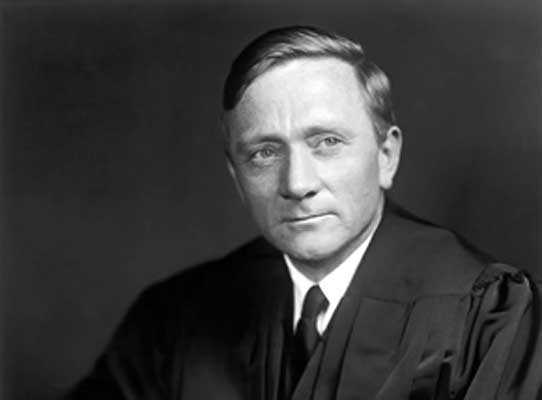
“The search for static security—in the law and elsewhere—is misguided. The fact is, security can only be achieved through constant change, adapting old ideas that have outlived their usefulness to current” facts.

William O. Douglas
Associate Justice
United States Supreme Court

The only real security in changing times, is the ability to adapt in time.

Spencer Johnson, M.D., author of Who Moved My Cheese?—a delightful little novella about four mice who are forced to deal with a new reality when someone moved the cheese they were used to finding in exactly the same place every day.


The truth is, you can only tolerate change to the level of your security.

Here are those 5 things I’m suggesting that never change. These 5 truths, if you will accept them, will provide ultimate mental, emotional, and spiritual security, even in the middle of a chaotic situation that never stops changing.


  1. God’s Love for You
    John 3:16 says, “For God so loved the world that He gave His only begotten Son, that whoever believes in Him should not perish but have everlasting life.”
  2. God’s Justice
    Romans 1:18 — “For the wrath of God is revealed against all ungodliness and unrighteousness of men, who [hold] the truth in unrighteousness.”
  3. God’s Message of Grace
    Romans 3:23-24 — “All have sinned and fall short of the glory of God, and are justified freely by his grace through the redemption that came by Christ Jesus.”
  4. The Plan of Salvation
    Revelation 22:17 — “The Spirit and the bride say, ‘Come!’ And let him who hears say, ‘Come!’ Whoever is thirsty, let him come; and whoever wishes, let him take the free gift of the water of life.”
  5. The Source of Power for Victorious Living
    Romans 8:11 — “If the Spirit of Him who raised Jesus from the dead dwells in you, He who raised Christ from the dead will also give life to your mortal bodies through His Spirit who dwells in you.”

Our security in Christ gives us the ability to rejoice in the adventure of living in the 21st Century! We can welcome change from a platform of spiritual security.

But, before we leave this subject, we need to dig a little bit deeper below the surface. Where can we find that spiritual security we so desperately need–and want–for positive, abundant Christian living in the right here and right now?

I’m currently reading a book entitled Simply Christian: Why Christianity Makes Sense, written by N. T. Wright—a British clergyman and theologian.

HarperCollins Publisher, 2006

In Simply Christian, Dr. Wright has included a “simply wonderful” chapter on worship! Just this morning—before writing this script—I read the first section of this chapter in which he expounds on the worship scenes in Revelation 4 and 5. I would encourage you to open your own Bible to those chapters and prayerfully meditate on them. For a few minutes, at least, isolate yourself from all other distractions as much as possible and allow the Holy Spirit to lift your mind into the heavenly realms where all created beings have assembled to praise and worship the Great Creator/Redeemer.


True worship is the very heart of the experience God designs for each of us to have with him. It is within the relationship of worship that our Creator can pour the rivers of grace into our lives he wants us to receive.

I designed this graphic to use as the banner on my personal Facebook page.


Banner on my personal Facebook page
https://facebook.com/loren.fenton

So, let’s explore what worship means.

The biblical Greek word proskuneo, which is translated into English as “worship” literally means “to kiss the hand toward.”

I’ve been told that in ancient Greece, a slave was required to kiss his hand toward his master whenever coming into his presence. If a slave were in another part of the house, and in doing his work happened to enter a room where his master was, he was to stop momentarily, kiss his own hand, and blow the kiss towards his master. This was meant to be a sign of loyalty and affection. It seems to me it is a fitting illustration helping us visualize our worshiping relationship to God, our Lord and Master.

Originally, in English, our word “worship” was “worth-ship,” referring to one who was worthy. In the British Commonwealth even today, a magistrate is addressed as “Your Worship” much as we Americans would address a judge in a court of law as “Your Honor.”

To worship, then, is to “kiss the hand toward one who is worthy,” assuming humility and complete submission, even as a slave before his master.

But, beyond this simple gesture, living actions are equally important as the “kissing of the hand.” If that Greek slave did not obey his master and do the work he was assigned, he would be unfaithful, guilty of insubordination, and worthy of expulsion from the household. It wouldn’t make any difference how much he blew kisses toward his master. If he didn’t do his work he would still be disloyal and disobedient.

The same thing is true between us and God. Only if we faithfully do his will can we be accounted as his true servants. Jesus said in Matthew 7:21, “Not everyone who says to me ‘Lord, Lord,’ shall enter into the kingdom of heaven, but he who does the will of my Father who is in heaven.”

Is this salvation by works? Absolutely not! We are saved by faith in the blood of Jesus and nothing else. But, our faithfulness in doing God’s will is in direct proportion to how much we love and honor him.

Truth be told, if a slave in ancient Greece was, in fact, surreptitiously undermining his master’s interests, I’m sure he would know in his heart that if his disloyalty were to be discovered it would mean his life! That would certainly not be conducive to personal peace and security within! I have no doubt he would worry day and night for fear of discovery.

But, there’s no need to worry over our security—or lack of it—with God! As noted earlier, the very first of the five things that never changes is God’s love for us. God told ancient Israel, “I have loved you with an everlasting love” (Jeremiah 31:3), and he sends the same message to you and me.

Is our obedience important to God? Of course it is! But, what God wants is an obedience that stems out of our love for him as Creator and Redeemer. The Lord told ancient Israel of his love for them, attempting to inspire their love for him. Some responded, of course, but the overwhelming history of the nation indicates their obedience was motivated purely from self interests.

It doesn’t have to be that way for us. We can choose, with the very same options available to them, to put our trust in God’s love and grace, knowing that our destiny—even our very life—is 100% secure for eternity. We can step forward in faith, following his revealed will for our lives, rejoicing in the opportunities we have to exalt the Name of our Master and Lord.


Thank you so much for listening today! I pray you have been blessed.

I hope you can join me for next week’s episode. I’ll be sharing some thoughts about Jesus, under the title “The Incomparable Christ.”

Be sure to tune in, and if you enjoy these Podcasts and Blogposts, please share with your friends, family, or whomever! My many thanks—in advance!

God bless.

 

Greetings once again friends! This is Episode 11 of the podcast. The title of this week’s episode is “A Pocketful of Paradox.” Click HERE to listen to the audio version.

The Bible is the most-read book in the history of humanity. Even today, the Bible outsells every other book many times over, to the extent that it is never included on any list of bestsellers (e.g. New York Times). If it were included, it would always, without exception, top every list everywhere. Everyone in the industry already knows that, so it isn’t considered “news.”

What drives this phenomenon? For certain, there are many factors at work here, but not one of them can provide a complete answer alone. However, neither the number of Bibles sold, nor the reasons behind the number, are the most important thing for our consideration today.

Can we trust the Bible? Are there irreconcilable inconsistencies in it? If there are inconsistencies, how important are they? How much weight should they carry to influence our understanding one way or another?

Let’s briefly explore a few of these questions today.


First, as we get started, let’s note that there are many “paradoxes” we can find throughout the pages of the Bible.

(A dictionary definition of “paradox” is “a seemingly absurd or self-contradictory statement or proposition that when investigated or explained may prove to be well founded or true.”)

Here’s a great line from Mother Teresa of Calcutta, an example of a paradox:

“I have found the paradox, that if you love until it hurts,
there can be no more hurt, only more love.”

Mother Teresa

A contradiction, on the other hand, consists of two statements, or assertions, which purport to define the same thing, but are, in fact, diametrically opposed to each other.

For instance, if I say, “The sky is always blue,” but someone counters by saying, “No, the sky is always red,” those two statements contradict each other. If the other person and I become defensive, digging in and insisting that “I’m right, and you’re wrong!” a massive argument could blow up in our faces and do serious, perhaps irretrievable damage to our relationship.

An objective, cool-headed third party, however, looks at that silly exchange and knows instantly that neither is 100% correct. The sky is normally blue, but there are times when the sunlight, clouds, and other factors cause the sky to appear flaming red.


Many times, critics who reject the Bible do so on the basis of what appears to them as irreconcilable contradictions and inconsistencies, but which, if understood correctly, are perfectly harmonious.

Here are a couple of examples:

The Bible pictures God both as (1) thundering from Sinai, and (2) being born as a helpless human child of poverty.

The gospel story about Jesus reports him (1) planning to meet with his disciples after the resurrection, and (2) crying out on the cross, “My God, my God, why have you forsaken me?”

While on the surface these may appear as contradictory, a student of Scripture knows that, in fact, both statements in both examples are true.

Sometimes, what is cited as a glaring inconsistency is simply a matter of education. A few months ago I read an anti-Bible article which cited an event which in one passage was said to take place at Mt. Sinai, while another Bible writer in another book said the same event happened at Mt. Horeb. The author of the article presented this as evidence that the Bible story was unreliable and couldn’t be “inspired.” It was obviously just a made-up folk-tale that changed from telling to telling.

What the person apparently didn’t know is that “Sinai” and “Horeb” are simply different names for the same mountain. There’s no contradiction at all.


Scripture does, however, contain some very legitimate paradoxes. Here are a few examples.

  1. Strength from Weakness

2 Corinthians 12:7-10 (NLT) — I was given a thorn in my flesh, a messenger from Satan to torment me and keep me from being proud. Three different times I begged the Lord to take it away. Each time he said, “My grace is all you need. My power works best in weakness.” So now I am glad to boast about my weakness, so that the power of Christ can work through me. That’s why I take pleasure in my weakness, and in the insults, hardships, persecutions, and troubles that I suffer for Christ. For when I am weak, then I am strong.

2. Finding Rest by Taking a Yoke

Matthew 11:28-30 — Jesus said, “Come unto me, all of you who are weary and carry heavy burdens, and I will give you rest. Take my yoke upon you. Let me teach you, because I am humble and gentle at heart, and you will find rest for your souls. For my yoke is easy to bear, and the burden I give you is light.”

3. Becoming Great Through Servanthood and Slavery

Matthew 20:26-28 — Whoever wants to be a leader among you must be your servant, and whoever wants to be first among you must become your slave. For even the Son of Man came not to be served but to serve others and to give his life as a ransom for many.”

4. Finding Life by Losing It

Matthew 10:39 — If you cling to your life, you will lose it; but if you give up your life for me, you will find it.

5. Victory Through Death

Philippians 2:8 — [Jesus] humbled himself in obedience to God and died a criminal’s death on a cross.


It’s obvious from these examples that, yes, the Bible does have some contradictions, and paradoxes. Certainly, many more can be found beyond these few I have cited. However, the more serious concern lurking behind the question of contradictions and paradoxes is What, or Who embodies reliable source(s) for ultimate moral authority. Where can we find the bedrock standards for human behavior? Is there any anchor available, or must we drift through life like a ship without anchor, sail, or rudder?

These are serious questions deserving serious answers.

In today’s world, codes of personal conduct often boil down to every individual deciding “what’s right for me.” Feelings and emotions become the governing factors of how people relate to one another. Hasty political policies spring up from the soil of unrest, riots, and anger, producing an “emotionocracy” subject only to the whims of an aroused public. The “rule of law” idea becomes a hopeless artifact from past generations. The French Revolution in 1789-1799 shows the terrible results of discarding all authority in favor of personal, unanchored “do whatever feels right, right now” ideas.

Every culture, every society throughout history has always had standards of “right and wrong.” The moral codes of conduct varied somewhat from culture to culture, but they were always there, nonetheless. In each culture, these codes provided the secure moral environment needed for both individuals and the wider community to survive and thrive.

Under the influence of the ancient Hebrews, and then Christians, a body of literature evolved—through a period of 1500+ years—providing the solid foundation we humans need for living moral, productive, and fulfilled lives. The Ten Commandments found in the Torah—the first five books of the Bible—set the gold standard for relating to both God and fellow human beings.

For over a millennium and a half, prophets, patriarchs, kings, and commoners composed stories, poetry, drama, history, and more, documenting the arc of God’s dealing with sinful people, from the beginning of creation to re-creation and restoration of a new heavens and a new earth filled with righteousness. Forty authors representing widely varying times, cultures, social strata, and even languages, all wrote amazingly cohesive messages with one overriding mega-theme: God’s love for humanity.

With that great length of time, and that body of authors—most of whom were completely disconnected from all the others—it is not surprising to find a few apparent “contradictions” or “paradoxes” cropping up in the overall text. Yet, when examined closely, those differences become insignificant when placed within the time and place of writing, the intended audience, social conditions, etc. The entire Scripture, from Genesis through Revelation, provides a cohesive standard for the best way to live.


In fact, we can say with full assurance, that even though there are paradoxes and passages that may seem to be contradictions, not one of these—even if they could prove to be true—carries enough weight to invalidate the message of the Bible:

To tell the story of God’s unconditional, unending love for mankind—from the original story of Creation, through the temptation and Fall in Eden, through the centuries of humanity’s wanderings, wars, and lustful living—all the way through the crisis at Calvary where Jesus, the Son of God, won the moral victory for all of Adam’s race, and on to the very end of sin and rebellion in the promised Earth Made New.

For anyone and everyone who is willing, there is more than ample evidence that we can trust the Bible. If you, or anyone else you know, might have serious questions about this, I highly recommend the ministry of Lee Strobel, specifically his first book, The Case for Christ: A Journalist’s Personal Investigation of the Evidence for Jesus (Zondervan, 1998; Updated and expanded edition, 2016). (Click on the picture for a link to the book on amazon.com.)

There is also a great movie telling the story of Lee Strobel’s journey of faith from atheism to belief, also under the title “The Case for Christ.” You can find this movie to watch, rent, or purchase on YouTube.com. If you are reading this on the GoodlifeNews.life blog post of this episode, you can click on the YouTube link for a direct connection. If you are listening to the podcast, I highly recommend that you open YouTube.com in your Internet browser, then do a search for Lee Strobel — L-e-e-S-t-r-o-b-e-l–or do the search for his books on amazon.

I am confident you will be blessed and inspired by his story, AND in the assurance that our Holy Bible is absolutely authentic in telling the story of God’s love and the redemption of human beings.


Thank you so much for listening today! I pray you have been blessed.

I hope you can join me for next week’s episode. I’ll be sharing some thoughts about security in times of chaos under the title, “Five Things that Never Change.”

Be sure to tune in, and if you enjoy these Podcasts and Blogposts, please share with your friends, family, or whomever! My many thanks—in advance!

God bless.
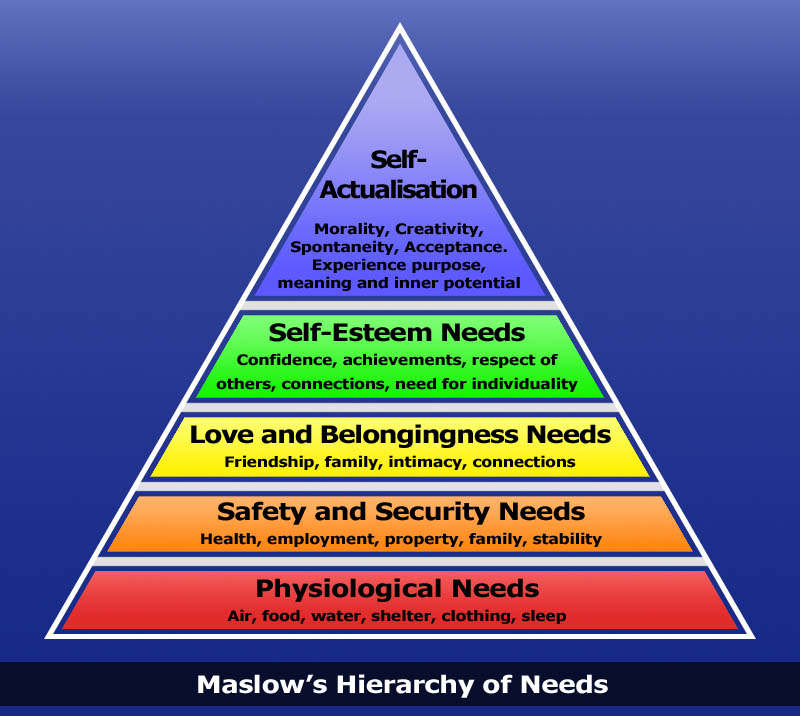
Author Jan Karon
Photo: http://www.charlotteobserver.com

Greetings once again friends! This is Episode 10 of the podcast. The title of this week’s episode is “Jan Karon: Beloved Creator of ‘Mitford, North Carolina.’” Click HERE to listen to the audio podcast.

Also, to access more information about Jan Karon or any of her books, simply click on any picture in this post.

In the schedule for GoodlifeNews! Podcast and Blog, I’ve designated the first episode of each month to feature a favorite author and/or book that I have found uplifting, entertaining, and inspiring.

Reading has always been a huge part of my life since before I started formal schooling as a child. I have literally read hundreds—if not thousands—of books over my lifetime. Not a few have had a profound influence in my life–how I think, broadening my horizons, giving me new perspectives, and teaching powerful principles for living.

I’m anxious to share some of those books, as well as favorite authors, with our GoodlifeNews! Podcast Villagers! So, as we move along from week to week, each month I’ll choose another author or book to highlight and share with you.

I hope you will be inspired to pick up a book and read it for yourself. It doesn’t have to be one I talk about, but reading itself is so important I want to do whatever I can to encourage everyone to make a regular habit of reading great books.


Today I want to tell you about Jan Karon, one of the most prolific writers of Christian fiction of the last 30 years.

Jan’s story is a beautiful example of what God can do with a redeemed life. She is beloved by millions of fans all over the world. Her writing is certainly her own style—simple, direct, engaging, at times hilarious, and other times emotional and profound. But underneath it all there runs a vein of authenticity rarely seen in any but the best of the best. Her characters come to life on the printed page. The reader can’t help but love them.

One of the reasons Jan’s writing carries so much compelling power is that she draws from her own deep well of raw experience. Many of her characters struggle with constant challenges just trying to make sense of their world. The author knows their struggle. She’s been through a lot of that herself.

Jan Karon writes of life in small-town, USA. Her fictional town of Mitford, North Carolina is patterned roughly on the village of Blowing Rock, NC where she lived for many of her “writing years.” The characters populating her Mitford stories could have stepped directly out of real life into her novels. They are each painted with painstaking brush strokes in wonderful word pictures. Personalities, attitudes, values, relationships—all come to life for the reader as the pages turn.

As a little girl, Jan dreamed of becoming a writer and a pastor. One day at age six, she stood on the front porch of her grandmother’s porch and began preaching. Her ambitions were short-lived, however, when her grandmother interrupted her with a gruff, “Girls can’t be preachers!”

That was the end of her preaching career. But, she still dreamed of writing stories.


When she was 10 she wrote her first novel. That one didn’t go very far, though. As soon as she finished it, she hid it under the vanity in her bedroom because she didn’t want anyone to discover that she had included a “bad” word! Nevertheless, her sister told their grandmother, who promptly gave young Jan a whipping for using that word.

I’m not sure if that experience carried over into later years and Jan’s writing content, but all of her stories, while staying true to life, are clean, uplifting, and wholesome. If you don’t like wading through a cesspool of sleaze, bad language, and gratuitous violence, you don’t need to worry about that with Jan Karon’s writing. Just enjoy the stories.

Her early years were pretty rough. Her parents divorced when she was 4 years old. She and her sister were sent to be raised by their maternal grandmother. Eight years later at age 12, Jan went to live with her mother and step-father in South Carolina. Two years after that, she dropped out of 9th grade and got married, which was legal in South Carolina at that time. When she was 15, she gave birth to her only child, a daughter she named Candace.

Sadly, that first marriage ended in divorce, and by the time Jan was 18 she was out on her own with a 3-year-old daughter. With only 8 years of formal education, the future looked pretty bleak for this young woman.

After searching for work, she got hired as a receptionist in an advertising agency in Charlotte. To pass the time when she wasn’t answering the phone, Jan began writing advertising copy to show her boss. He was impressed with her writing skills, and put her to work as a writer for the agency.

Over the next decade and a half, Jan worked for several different advertising companies, winning major awards in the industry. But, despite her great success in the field, it all felt empty. Through three marriages and three divorces, life seemed to her like a hollow shell void of any meaning or significance.

One night when she was 42, feeling at the very end of her desperation, she lay on her bed and asked Jesus Christ to come into her life. That was the turning point that started her on a completely new path.

Eventually, 8 years later, at age 50, Jan quit her job in advertising and took a leap of faith to fulfill her childhood dream of writing novels. Now, 34 years later, she has written an astounding 30 books! I personally own copies of about half of them.


Jan’s first book that became an instant blockbuster on the New York Times list of best selling books was At Home in Mitford, published in 1994 in the hardback edition, with the paperback version arriving in 1996.

For several years after she left the advertising industry, Jan struggled with various with attempts to make a go of her writing career. One evening, as she closed her eyes to go to sleep, she saw in her mind the picture of an Episcopal priest walking down a small-town street. In that moment she knew she had found the answer.

Father Tim Kavanaugh becomes the central figure for the entire Mitford series. “Father Tim,” as he is known to everyone in town, is a beloved pastor to his flock, and is himself somewhat of an institution in the territory around Mitford as well as in the village itself.


Here’s the description of the story on the back cover of the paperback book:

“Enter the world of Mitford, and you won’t want to leave.

“It’s easy to feel at home in Mitford. In these high, green hills, the air is pure, the village is charming, and the people are generally lovable.

“Yet, Father Tim, the bachelor rector, wants something more. Enter a dog the size of a sofa who moves in and won’t go away. Add an attractive neighbor who begins wearing a path through the hedge.

Now, stir in a lovable but unloved boy, a mysterious jewel thief, and a secret that’s sixty years old.

“Suddenly, Father Tim gets more than he bargained for. And readers get a rich, provincial comedy in which mysteries and miracles abound.”

Publishers Weekly adds, “For readers yearning for a cozy, neighborly read, the town created by Karon’s fine descriptive style has much to recommend it.”

And, of course, I wouldn’t be telling you about this author and her outstanding body of work if I didn’t find it of great value for our GoodlifeNews! Podcast listeners and readers. Subsequent volumes in the Mitford series, and additional books by Jan, provide an incredible treasure chest filled with examples of healthy relationships, working out problems, learning to forgive, learning to celebrate victories, discovering one’s own emotional and spiritual needs, and growing in grace.


I was first introduced to Jan Karon’s “Mitford” books by my sister Beulah Fern. Her husband, Jim had passed away a few years earlier.

Jim graduated from college with a bachelor’s degree in theology many years before he and Beulah Fern met. However, he had never married—and because he didn’t have a wife he never received a call to pastoral ministry—that was the rule in our denomination back in those days. As a result, he spent most of his working years teaching high-school shop classes in the public school system.

However, he never lost his heart for ministry, and after his retirement, he and Beulah Fern moved from Southern California to Irrigon, Oregon—a tiny community on the banks of the Columbia River in Morrow County. There they served a small congregation as the pastoral couple for about three years. Jim and Beulah Fern were much loved by the members of their church, and even today they are remembered with great fondness.

When Beulah Fern handed me a copy of At Home in Mitford, she said, “This is such a wonderful story. The main character, Father Tim, reminds me so much of Jim!”

After becoming acquainted with Father Tim in Jan Karon’s story, I couldn’t agree more. It was a fun read. But, more than that, the solidly serious foundation of faith and hope that is the heart of Christian life permeates every anecdote, setting, and dialog conversation. That was very true in my brother-in-law Jim’s life. He loved life, had a great sense of humor, and even had a huge dog! The parallels we saw in Father Tim’s life in Mitford with our real-life, much loved family member were uncanny. And, they made us love the Mitford stories all the more.

At Home in Mitford was followed by a seemingly unending parade of Mitford books. Jan Karon’s millions of fans couldn’t get enough, and anxiously waited the 18-24 months for the next book in the series. I even found myself checking the location of her books at Barnes & Noble whenever we stopped there, just to see if a new book was out yet. I had to learn patience like all her other fans, of course.

One year, I was delighted to discover The Mitford Bedside Companion: A Treasury of Favorite Mitford Moments. I immediately knew this was the perfect Christmas gift for both my sisters who loved the Mitford stories. When they removed the wrapping paper their eyes brightened with delight. It’s always nice to give a gift that will be a blessing to the receiver!

I’m sure you have the idea by now that I’m a fan. But, more important than that, I am a firm believer in this biblical principle for living an abundant life in Christ. King Solomon—the “wise man” of the Bible—advised his son:

“Guard your heart above all else, for it determines the course of your life.”

Proverbs 4:23

What you choose to put into your mind—regardless of how large or small that input might be—will inevitably bear fruit. Choosing the good will empower you to live a productive, God-honoring life that will be a powerful witness for Jesus in your circles of influence.

Jesus said, “A good person produces good things from the treasury of a good heart . . . . What you say flows from what is in your heart” (Luke 6:45 NLT).

And, let’s finish today with this from the Apostle Paul: “Fix your thoughts on what is true, and honorable, and right, and pure, and lovely, and admirable. Think about things that are excellent and worthy of praise” (Philippians 4:8 NLT).

A great book with a well-crafted, well-told story can help you do that.

I heartily endorse Jan Karon’s works to that end.


Thank you so much for listening today! I pray you have been blessed.

I hope you can join me for next week’s episode. I’ll be sharing some thoughts about the purpose and power of the Bible, which I’ve entitled, “A Pocketful of Paradox.”

Be sure to tune in, and if you enjoy these Podcasts and Blogposts, please share with your friends, family, or whomever! My many thanks—in advance!

God bless.

 

Greetings once again friends! This is Episode Nine of the podcast. The title of this week’s episode is “Personal Practices of Prayer.”

This is a follow-up to the two-part series focusing on the meaning of several key expressions in The Lord’s Prayer—the prayer Jesus taught his disciples—which were the focus for our time together last week and the week before.

A Little Background

The bulk of this chapter is taken from a book I wrote and published in 1977. Thirteen Weeks tor Riches: (Which Could Be Glory) was my first attempt at writing and self-publishing a book. The last chapter in Thirteen Weeks was titled “Daily Growth.” I have adapted and updated some of the content for My Seven Essential Daily Prayers

(As an aside, here are the seven prayers I write about in the book:

  • Purity in My Mind
  • Righteousness in My Heart
  • Integrity in My Life
  • Joy in My Spirit
  • Strength for My Body
  • Wisdom for My Counsel
  • To Be a Godly Influence in the World

The eighth—and final—chapter in the book acts as a summary where I shared some thoughts about “What’s next? Where do I go from here?” The title/subtitle of the chapter is . . . “Building The Firewall: Establishing a Daily Habit of Essential Prayers.”

The following stories and thoughts are adapted from that chapter.


If you would like to have more information about the book, you can look it up on amazon.com or click on the picture above.)


During the early to mid-1970s my wife and I—together with our two young children—lived in Taiwan as missionaries. The first two years of our residence there were spent learning Mandarin Chinese. We were part of a small group of other young couples who had been asked by the denomination to prepare for ministry among the millions of Chinese people scattered throughout Asia, including—possibly—the Chinese mainland.

Taiwan provided a base for us to learn the language, become acquainted with—and adapted to—the Chinese culture.

Quite frankly, those early months spent in learning the language were often challenging, even discouraging. It seemed all of us desperately need a spiritual lift. Learning how to pray effectively seemed to hold the promise for answers to what we were feeling. We needed encouragement and inspiration.

Well, God works in mysterious and wonderful ways. Several of our fellow language students joined us in praying for God to send someone who could guide our understanding and practice of personal prayer.

Very soon, after we began sharing our need with each other and with God, we received notice that a well-known minister from America was scheduled to hold a prayer conference in Taipei! Praise the Lord! We were excited to know God was answering our need.


Pastor Glenn Coon

The speaker was a retired minister about seventy years old. He had more spark and energy than I’ve seen in many men much younger! His secret was a daily connection with God, giving him a divine enthusiasm for life.

Pastor Glenn Coon told of his experience when he left home to attend college. His father, a godly man, took him to the railroad station. Before they parted they had prayer together, then his father gave him this advice: Spend at least one hour every day with the Lord—no matter what.

When Glenn arrived at the college he got a job milking cows on the college farm. He had to leave for work at 4:00 a.m. A busy school program kept him quite busy with classes and study until quite late at night, so to get his “hour with the Lord” he had to get up at 3:00 a.m.! He did this faithfully every morning all during his college years.

At the prayer conference Pastor Coon told me, “I have continued the habit of spending an hour with God every morning. Not always at 3:00 a.m., but every morning before anything else has a chance to interrupt, my time with the Lord has always had the highest priority. It is this habit—more than anything else—that has energized my life and given me the strength I need every day.”


When I heard Pastor Coon give this testimony I was inspired to follow his example. I set my alarm clock for 6:00 a.m.—a half hour earlier than my normal wake-up time. The following morning I headed downstairs to my den. I was ready to begin this new adventure in prayer. I closed and locked the door behind me and sat down at my desk.

It was only then that I felt the enormity of my ignorance. I realized at that moment I had no idea how I could ever spend a full hour in communion with God.

I sat at my desk and bowed my head.

“Lord,” I prayed, “teach me what I should do here now. I admit, I don’t know what to do or what to say.”

As I prayed those words the thought flashed through my mind that part of prayer is Bible study—and good Christian reading material. So I decided to try dividing the hour into three 20-minute segments: the first twenty minutes for reading; the second period for Bible study; and the third for prayer.

Behind me on the wall was a whole library of books and other miscellaneous materials for reading. I selected a book I’d been wanting to read for some time, opened it, and began.

At the end of 20 minutes I put in a bookmark, and set the book in a special place on my desk and turned my attention to the Bible.

How to study it?

I had read the Bible through from cover to cover a couple of times already. I didn’t want to do the same thing over again. I wanted variety.

I couldn’t think of any special way to study the Bible that morning, so I decided I would read the New Testament in a modern translation. That would be a change. I picked out Today’s English Version. I’d been wanting to read it for a long time.

Now came the real trial. How could I spend an entire twenty minutes on my knees? Twenty minutes! That block of time seemed as formidable as a fortress. Previously, I had never been able to spend even five minutes in prayer without getting bored.

But now, here I was. The time had come.

I pushed my chair back and knelt before my desk.

Lord,” I prayed again, “I don’t know how to pray like this. Help me know—and help me to pray the way you want me to.”

I didn’t hear any trumpets or audible voices, but once again I heard in my spirit the same voice I had heard before in moments of spiritual awakening. I recognized his voice immediately. The Holy Spirit directed my thoughts to Jesus teaching his disciples to pray.

Still on my knees I reached over and got my Bible, and turned to the Lord’s Prayer.[ Matthew 6:9-13] As I studied this model prayer I saw that it was divided into three major parts:

  1. Praise
  2. Petition
  3. Honor

So, that’s my trouble! I thought. All I’ve ever done in prayer is make requests. What I need to do is begin and end my prayer with praise!

I closed my eyes again and started to praise the Lord.

But, the thought crossed my mind, What should I praise him for? What has he done for me?

You know, we usually do just that. Our center is not God, but ourselves! “What has he done for me?” is the question we’re always asking. It’s as self-centered as can be!


Suddenly it flashed into my mind that our praise of God—our worship of him—doesn’t depend on whether he has done anything for us or not. We should worship him and praise him because he is worthy of worship. He is worthy of praise!

After a few moments I remembered some requests I needed to present to the Lord. I spoke them aloud and then thanked him for answering these needs according to his wisdom and love. I ended my prayer time with another session of praise and worship.

I looked at my watch. My twenty minutes were just finishing. I hadn’t been bored at all!

But, before closing this story, I must sound one note of caution. If you are looking for a thrilling experience with God, you must not make the experience primary. You must make God himself the object of your adoration and praise. We must not worship the experience we seek. Instead we must worship our great Creator God. He—and he alone—is worthy of worship.


Thank you so much for listening today! I pray you have been blessed.

I hope you can join me for next week’s episode. I’ll be sharing some thoughts more thoughts with you.

Be sure to tune in, and if you enjoy these Podcasts and Blogposts, please share with your friends, family, or whomever!

God bless.